Screen Company Software for Window Screen & Screen Door Businesses
What screen company software should cover—from inquiry and estimating through dispatch, shop production, field closeout, and billing—and how ScreenOps connects those jobs.
Direct answer
Screen company software is the operating system for window screen and screen door work: it keeps customers, properties, estimates, schedules, shop production, field visits, and billing connected so every job has one shared record from inquiry to closeout.
Key takeaways
- Screen work is property- and opening-centric, not just a contact pipeline.
- Estimates, materials, and install visits must share one job record.
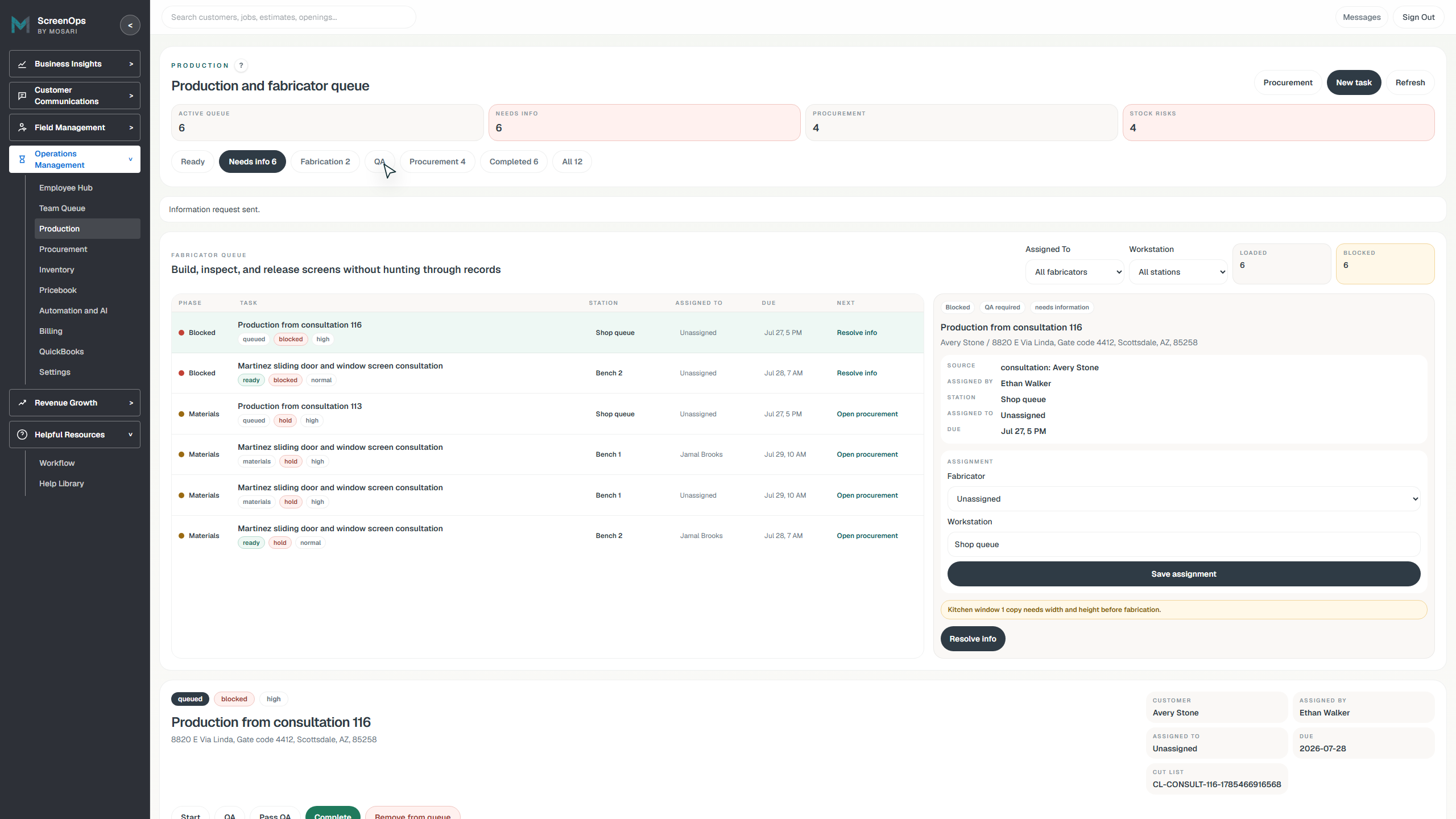
- A production queue closes the gap between sold work and ready screens.
- Maps, messaging, payments, and QuickBooks should be described only when enabled for your company.
What screen company software should cover
Healthy screen shops rarely fail because they lack a place to store phone numbers. They lose margin in handoffs: inquiry notes that never reach the estimator, estimates that omit frame details, installs scheduled before mesh is ready, and warranty visits with no photo history.
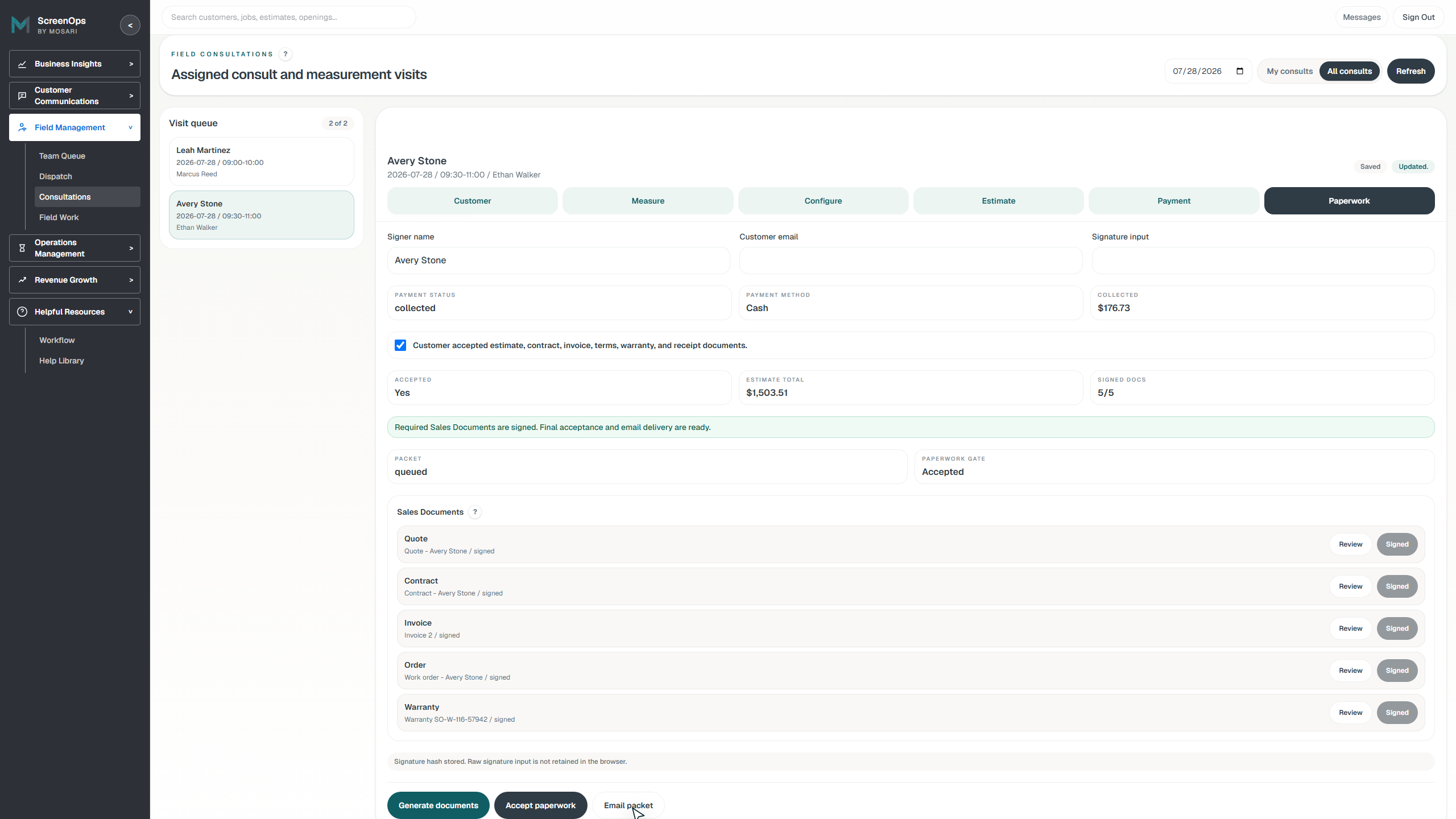
Useful screen company software therefore covers more than lead capture. It should connect inquiry intake, consultations and estimates, dispatch, field closeout, shop production, material readiness, property/opening history, and—when enabled for your company—customer payments and accounting connections. If any two of those layers live in separate tools, teams rebuild the same job details by hand.
How work moves through ScreenOps
- 1
Capture the inquiry
Public intake and office capture bring screen-service requests—and photos when needed—into review before a visit is scheduled.
- 2